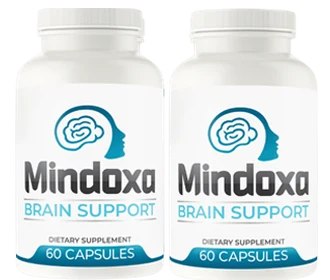
Mindoxa: Daily Capsules for Memory & Brain Support
Mindoxa is a mushroom capsule taken every morning to support memory and everyday focus, alongside sleep, exercise, hearing checks and regular visits with your doctor. The dose is two capsules a day; every 60-capsule bottle lists ten mushrooms, led by Lion's Mane, Reishi and Cordyceps, yet no milligram amounts are published. It is not donepezil, memantine or any prescription dementia drug. Bottles cost $49 to $79 depending on pack size, and each order carries a 180-day money-back window.
Prepared by the Mindoxa Extract Audit Desk; every figure checked against the bottle front, the seller's presentation and policy pages, the ClickBank checkout and 53 studies and agency pages Fact-check completeLast audit October 19, 2026
6-pack works out at $1.63 dailyNo shipping fee on 3 or 6Arrives in 5-7 business days
Capsule profileFrom bottle & seller
FormatCapsules, 60 a bottle
Taken per day2 capsules
Bottle covers30 days
Mushrooms named10
Mg of each mushroomNot published
Refund clock180 days
Six-card brief
Mindoxa at a glance
The facts that matter before anything else, each traced to the bottle, the seller's presentation, its policy pages or the ClickBank checkout as they read on October 19, 2026.
Primary roleMushroom-based "brain support" for memory and focus
"Brain Support" is the only claim on the bottle front. The presentation goes much further, which is the main reason this page exists.
Serving & formA pair of capsules each morning
The six-bottle pack is billed as 180 days, which makes every 60-count bottle a month. The seller's FAQ says to take the "daily serving as directed on the label" with water, ideally at breakfast.
Key activesLion's Mane, Reishi, Cordyceps and seven supporting mushrooms
The others are Chaga, Shiitake, White Button, Maitake, Turkey Tail, Wood Ear and Sun Mushroom. No amounts, parts used or extract standards are published.
Manufacturing statement"Manufactured in the United States"
The seller adds vegetarian, non-GMO, and free from gluten, dairy, soy, preservatives and fillers. It names no facility, registration or third-party test.
Price tiersBetween $49 and $79 a bottle
Six bottles total $294, three total $207, and two total $158 with $9.95 added for U.S. delivery. Each order is one charge; nothing renews.
Trial windowHalf a year, counted from checkout
Money comes back through ClickBank after all the bottles, used or sealed, land at the seller's Colorado warehouse with a note naming the order. Postage back is on you.
Short version
Mindoxa in 60 seconds
Four points for a reader who wants the verdict before the evidence.
What you are buyingA capsule of ten culinary and medicinal mushrooms sold as a dietary supplement. It is not a memory drug, no study has examined the finished blend, and it cannot diagnose or treat mild cognitive impairment, Alzheimer's disease or any other dementia.
Where it sits in your dayA pair of capsules at breakfast, swallowed with water. The habits with real trial data for memory, regular aerobic exercise, enough sleep, treating hearing loss and reviewing sedating medicines, belong in the same plan.
Who might reasonably try itAdults whose forgetfulness has been checked by a doctor and found ordinary, who like the idea of a mushroom routine and accept a label with no published amounts. Anyone on blood thinners, diabetes drugs or immune suppressants needs a pharmacist's view before the first dose.
If it does nothing for youThe refund runs for 180 days after checkout. Score your everyday lapses before starting and again each month; a flat log around day 140 is the signal to box up all the bottles, add the order ID, and post them back in good time.
The real worry
Why people look for a memory support supplement like Mindoxa
Some slowing of recall with age is normal: taking longer to retrieve a name, or misplacing glasses now and then. The National Institute on Aging separates that from memory loss that disrupts daily life, which deserves a medical evaluation[1][2]. Most people who search for a product like Mindoxa sit somewhere in between, and that middle ground is where clear thinking about evidence matters most.
Names and words that will not come
The tip-of-the-tongue moment, knowing a name is there but not being able to reach it, becomes more frequent from midlife and is the lapse people mention first. On its own it is usually a retrieval delay rather than a storage failure: the name arrives later, often when you stop trying. The Mindoxa presentation reframes these moments as a failing "save button". That is a vivid metaphor, but the research it borrows from, on long-term potentiation, describes how memories are formed, and a delayed name is mostly about retrieval[10].
Rooms, keys and the reason you walked in
Forgetting why you entered a room, or where the keys went, is mostly about attention at the moment of encoding. Divided attention, poor sleep, stress, pain, alcohol and a long list of medicines all make it worse; older adults who took strong anticholinergic drugs, such as some sleep aids, bladder pills and older antidepressants, for years had a higher risk of dementia in a large cohort[5]. Sleep in particular is when the brain consolidates the day's experiences into lasting memories, which is why a week of short nights can feel like a week of failing memory[7].
Reading the same paragraph twice
Losing the thread while reading or in conversation is a common complaint with hearing loss, low mood and fatigue. Hearing loss deserves a special mention: it is one of the largest modifiable risk factors in the 2024 Lancet Commission on dementia, and in the ACHIEVE trial hearing aids slowed cognitive decline in the subgroup of older adults at higher risk[9][6]. A hearing test is cheaper than any supplement and has better data.
Fear of what comes next
Many readers arrive here because a parent had dementia and they are watching themselves for the first signs. That fear is reasonable, and the honest answer is encouraging in a different way from the sales story: about 45 percent of dementia cases worldwide are linked to modifiable risk factors such as hearing loss, high blood pressure, high LDL cholesterol, inactivity, smoking, diabetes, depression and social isolation[9]. Working on those has evidence: in the Finnish FINGER trial, two years of diet, exercise, cognitive training and vascular check-ups improved cognitive scores in at-risk adults aged 60 to 77[38][53]. A capsule is, at best, an extra.
See a clinician before buying anything if:
forgetfulness is getting worse over months, someone close to you has noticed it, you get lost in familiar places, repeat the same questions, struggle with bills or medicines you used to manage, or notice changes in mood or personality. Sudden confusion, slurred speech or weakness on one side is an emergency. Several causes of memory trouble are treatable, including low vitamin B12, thyroid disease, depression, sleep apnea and medicine side effects[3][4][1].
Definition
What is Mindoxa?
Mindoxa is an encapsulated dietary supplement available only online, from the seller's own order page with payment taken by ClickBank, in bundles of two, three or six 60-count bottles. Four lines of text appear on the front of each bottle: the Mindoxa name under a teal head-and-brain logo, "Brain Support", "Dietary Supplement" and "60 Capsules". The seller's support page sends product questions to a Zendesk helpdesk and lists phone numbers that its own shipping page identifies as ClickBank's; the copyright line on that support page reads "Revaslim 2025", another product name, which suggests a shared template. ClickBank is the legal retailer and handles billing, refunds and order tracking.
Because it is regulated as a supplement, Mindoxa can say it backs up a normal body function, which is what "brain support" does, yet it cannot say it treats, cures or prevents Alzheimer's or any other disease, and no agency checks its safety or benefit before it goes on sale[47][49]. For a buyer that has one practical meaning: every piece of evidence available concerns single mushrooms, studied elsewhere, in other preparations and at doses that may bear little relation to the capsule.
The formula is described in a long written presentation narrated by a "Dr. Thomas Crane". It introduces three "stages" of a memory-saving process and assigns one mushroom to each: Cordyceps to "power up the save signal", Reishi to "activate the memory pathway" and Lion's Mane to "build the storage". Seven more mushrooms, Chaga, Shiitake, White Button, Maitake, Turkey Tail, Wood Ear and Sun Mushroom, are described as a "protective shield". The presentation says the formula went from a powder stirred into water to capsules, and calls the result "10 clinically-studied natural compounds" in a "precise ratio", without stating that ratio anywhere.
What Mindoxa is not: it is not donepezil, rivastigmine, galantamine, memantine or any antibody therapy for Alzheimer's disease; it is not a treatment for mild cognitive impairment; and it is not a substitute for the evaluation that new or worsening memory problems deserve[1]. The seller's own footnote says story scenes in the presentation are AI-generated illustrations and that testimonials are not guarantees of results. Read the rest of the presentation with that in mind.
Mechanism audit
How is Mindoxa supposed to work?
The seller's explanation rests on long-term potentiation (LTP), which it calls the brain's "save button". The neuroscience is real; the step from that neuroscience to a mushroom capsule is where the evidence thins out. Each stage is tested in more depth on how Mindoxa works.
The "save button": long-term potentiation, accurately
When two connected neurons fire together repeatedly, the synapse between them can strengthen for hours to weeks. That is LTP, first described in rabbits in 1973 and accepted as a leading cellular model of how memories form[10]. Researchers can estimate a related "LTP-like" plasticity in the human cortex with transcranial magnetic stimulation, and those responses are weaker in people with Alzheimer's disease, as a 2016 study from Rome showed[11]. The sales page cites a Harvard study and a Milan cohort of 73 adults for similar points but gives no references, so neither could be checked. Nothing in this research tested a supplement, and none of it shows that the save button can be "restored" by eating anything.
Stage one in the pitch: Cordyceps and the "signal"
The presentation credits cordycepin, a compound in Cordyceps, with rebuilding damaged hippocampal wiring. Cordycepin (3'-deoxyadenosine) is a genuine bioactive molecule with a large laboratory literature, but that literature is cell and animal work[17]. Human trials of Cordyceps products have measured exercise capacity, not memory: about 1 gram a day of the fermented Cs-4 strain for 12 weeks modestly improved aerobic measures in adults aged 50 to 75, and a Cordyceps militaris blend helped high-intensity exercise tolerance in younger adults[19][18]. Cordycepin is most abundant in C. militaris, and the seller does not say which species or strain it uses.
Stage two: Reishi and the CREB and BDNF pathway
CREB and BDNF are real molecules in memory formation. The study the presentation describes, Reishi polysaccharides improving cognition and the birth of new neurons in a mouse model of Alzheimer's disease, also exists[20]. It is a mouse study. In people, Reishi's largest evidence base is in cancer care, where a Cochrane review judged it too weak to support use as a first-line treatment[21]. There is no trial of Reishi for memory in humans that we could find.
Stage three: Lion's Mane and nerve growth factor
Lion's Mane is the one mushroom in the formula with human cognitive trials. Its fruiting body contains hericenones and its mycelium erinacines, both of which stimulate nerve growth factor synthesis in laboratory studies[16]. In a Japanese trial, 30 adults aged 50 to 80 with mild cognitive impairment took 3 grams a day of dried fruiting-body powder for 16 weeks; their scores on a cognitive scale rose compared with placebo and fell again within four weeks of stopping[12]. Later trials were also small: a 12-week study in healthy adults over 50, a 49-week pilot of an erinacine A-enriched mycelium in mild Alzheimer's disease, and a 28-day study in young adults at 1.8 grams a day that found faster performance on one task but no overall cognitive gain[13][14][15].
The "protective shield": seven supporting mushrooms
The remaining seven are assigned antioxidant, anti-inflammatory, blood sugar, immune and circulation roles. The most interesting is ergothioneine, an amino acid concentrated in shiitake and other mushrooms: blood levels fall with age and are lower in older adults with cognitive impairment, and people who eat more mushrooms have lower odds of mild cognitive impairment in observational studies[25][26][27]. Those are associations seen with mushrooms eaten as food, often more than two portions a week, not effects of a capsule.
The idea behind ten mushrooms, and its limit
Combination formulas assume that small effects from many ingredients add up. That assumption is only testable when each ingredient is present at a known, meaningful dose, and the finished blend is then tested. Mindoxa provides neither. Two ordinary capsules hold roughly a gram of powder; the single best-supported preparation in this list, Lion's Mane fruiting body, was studied at three times that amount on its own. The dose section below works through the arithmetic.
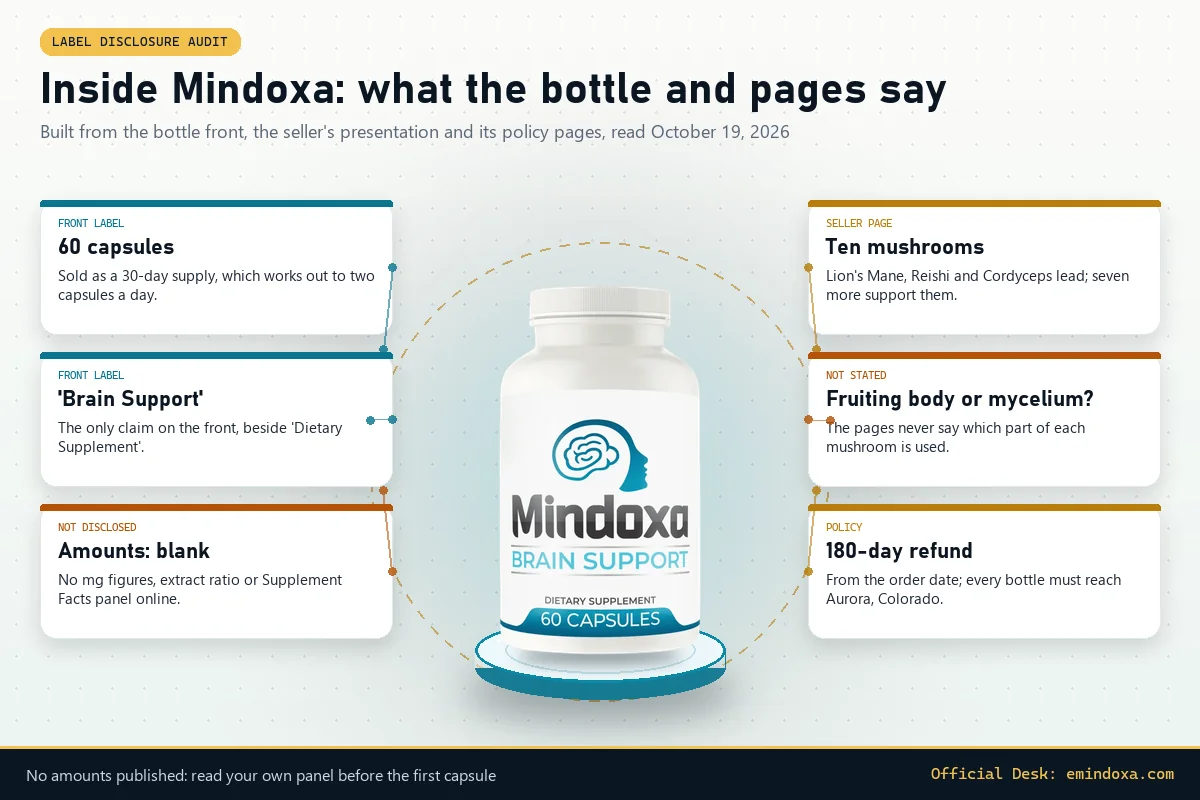
Figure 1. The Mindoxa disclosure map: what the bottle front and sales pages state, with the two facts a pharmacologist asks for first, amounts and the part of each mushroom, left blank.
Monographs
What are the ingredients in Mindoxa?
Seven groupings covering all ten mushrooms, each paired with what human research shows. Doses in the research boxes come from the trials; Mindoxa's own amounts are not published. The full monographs, with species and preparation details, are on the ingredients page.
Lion's Mane Hericium erinaceus
A white, shaggy mushroom that grows on hardwood, eaten as a delicacy in East Asia. Fruiting bodies supply hericenones; mycelium supplies erinacines. Which one a product uses changes what it can claim from the research.
Lion's Mane: the research
A 16-week trial in 30 adults with mild cognitive impairment used 3 g a day of fruiting-body powder and found better cognitive scores than placebo that faded after stopping. Other trials are small and use different preparations[12][13][14][15].
Reishi Ganoderma lucidum
A glossy red bracket fungus used in Chinese and Japanese tradition for two thousand years. Its triterpenes are bitter, so products are usually hot-water or alcohol extracts rather than raw powder.
Reishi: the research
Memory effects come from mouse studies; human evidence is mostly in cancer care and is weak. Rare cases of severe liver injury have been linked to reishi powder, and MSKCC lists bleeding, blood pressure and blood sugar cautions[20][21][22][23][40].
Cordyceps species not stated
Wild Cordyceps sinensis grows on caterpillar larvae in the Himalayas and is far too expensive for a $49 bottle, so supplements use cultivated C. militaris or fermented mycelial strains such as Cs-4. They differ in cordycepin content.
Cordyceps: the research
Human trials studied exercise capacity at about 1 g a day or more, with modest results; cognitive claims rest on laboratory work on cordycepin[19][18][17][43].
Chaga Inonotus obliquus
A black, cracked growth on birch trees, traditionally brewed as a tea in Russia and Scandinavia. It is not a true fruiting body but a sterile mass of fungal tissue, and it is unusually rich in oxalate.
Chaga: the research
No human trials for memory; the 2025 study the presentation cites is in animals. A woman who took several teaspoons of chaga powder a day for months developed oxalate kidney injury, and MSKCC notes possible effects on blood sugar and clotting[24][42].
Shiitake and White Button Lentinula edodes, Agaricus bisporus
The two most eaten mushrooms in the world. Shiitake is a leading dietary source of ergothioneine; white button mushrooms treated with UV light become a source of vitamin D2[36].
Shiitake and white button: the research
Eating 5 to 10 g of dried shiitake a day for four weeks improved immune markers in young adults; diets with more mushrooms track with lower odds of cognitive impairment. Raw or undercooked shiitake can cause a striking whip-like rash[29][27][28][30][46].
Maitake and Turkey Tail Grifola frondosa, Trametes versicolor
Maitake is the frilly "hen of the woods"; turkey tail is a banded bracket fungus whose extracts PSK and PSP are used alongside cancer treatment in parts of Asia. Both are prized for their beta-glucans.
Maitake and turkey tail: the research
No memory trials. Turkey tail was well tolerated at 3 to 9 g a day in a phase 1 trial in women after breast cancer treatment; maitake may lower blood sugar and raised one warfarin patient's INR[32][31][41][44].
Wood Ear and Sun Mushroom Auricularia, Agaricus blazei
Wood ear is the rubbery black fungus in hot-and-sour soup; sun mushroom, also sold as A. subrufescens, is an almond-scented relative of the button mushroom popular in Brazil and Japan.
Wood ear and sun mushroom: the research
Wood ear inhibits platelets: heavy eaters developed spontaneous bruising, a condition named "Szechwan purpura". Severe liver dysfunction was reported in cancer patients taking sun mushroom extract[33][34][45].
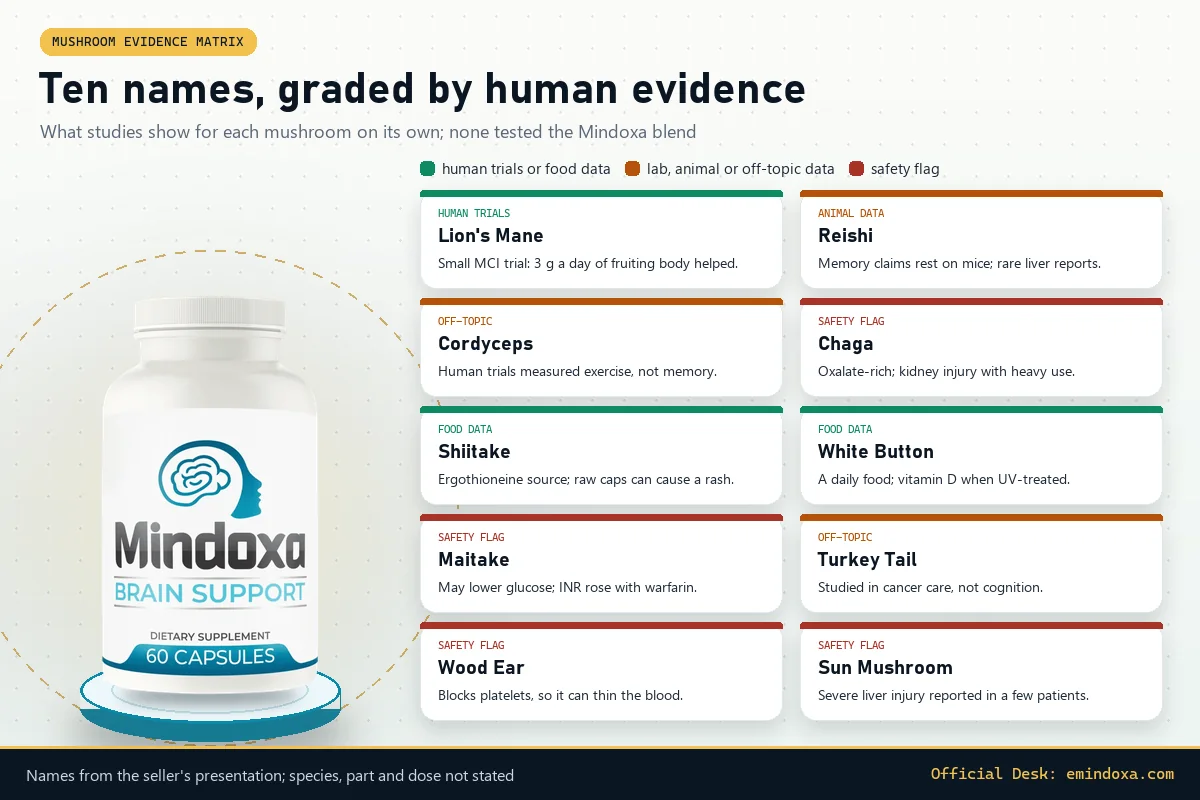
Figure 2. Evidence grades for the ten names. Green tiles have human trials or food data, amber tiles rest on lab, animal or unrelated human data, red tiles carry a published safety caution.
The honest part
Mindoxa dose vs. the doses researchers used: an honest look
Nothing on the public pages is quantified, and nobody has trialed the blend
A supplement label may group ingredients into a proprietary blend and list them by weight without giving each one's amount, but it must state the blend's total weight, and for botanicals it must name the part used[48]. On the public pages we could reach, Mindoxa provides none of this: no blend weight, no part of each mushroom, no extract ratio and no marker compound such as beta-glucans, triterpenes or erinacines. With no numbers, the only tool left is arithmetic from the capsule itself, and it is worth doing because it bounds what is physically possible.
Mushroom powders are light and fluffy. A size 0 capsule holds roughly 350 to 500 mg of mushroom powder, a size 00 roughly 500 to 650 mg. A day's pair of capsules, then, carries in the region of 700 to 1,300 mg altogether. Split evenly across ten mushrooms, that is about 70 to 130 mg of each. Formulators rarely split evenly, and an extract can be concentrated, so the three lead mushrooms could be larger shares. But a capsule cannot hold more powder than fits in it, and "10:1 extract" claims describe the raw material a manufacturer says it started from, not what any trial measured.
Blend arithmetic: what an even split would give
Mushroom
Preparation and daily amount in human studies
Published Mindoxa amount
Could two capsules hold that much?
Lion's Mane, fruiting body
3,000 mg a day for 16 weeks, adults with MCI (Mori 2009)
not published
No: more than double the total capsule fill
Lion's Mane, erinacine A-enriched mycelium
About 1,050 mg a day for 49 weeks, mild Alzheimer's pilot (Li 2020)
not published
Only if it were nearly the whole blend, and that specific extract
Lion's Mane, young adults
1,800 mg a day for 28 days (Docherty 2023)
not published
No
Cordyceps Cs-4 mycelium
About 1,000 mg a day for 12 weeks; exercise, not memory (Chen 2010)
not published
Only as the dominant ingredient
Shiitake, whole dried
5,000 to 10,000 mg a day for 4 weeks; immune markers (Dai 2015)
not published
No: five to ten times the capsule fill
Turkey tail mycelium
3,000 to 9,000 mg a day; tolerability in cancer care (Torkelson 2012)
not published
No
Reishi, Chaga, White Button, Maitake, Wood Ear, Sun Mushroom
No human memory trial to compare against
not published
No benchmark exists
Two conclusions follow. First, the one ingredient with real human cognitive data, Lion's Mane, was studied at doses that two capsules shared with nine other mushrooms almost certainly cannot reach, unless the seller is using a concentrated extract it has not described. Second, the seven "shield" mushrooms have no human memory trials at any dose, so their amounts matter mainly for safety. If you buy, read the blend weight on your bottle, type it into the calculator above, and ask the helpdesk for the per-mushroom amounts and the part used; a confident seller usually answers[12][14][15][19][29][32].
Label transcript
What does the Mindoxa label say?
The public record, arranged in the shape of a Supplement Facts panel. Lines in amber belong on a compliant bottle but could not be seen on any page the seller has put online. The Supplement Facts page walks through each line and adds a worksheet.
Named: Cordyceps, Reishi, Lion's Mane, Chaga, Shiitake, White Button, Maitake, Turkey Tail, Wood Ear, Sun Mushroom (order by weight unknown)†
Part of each fungus (fruiting body, mycelium, extract)not visible
Extract ratio or marker compound (beta-glucans, triterpenes)not visible
Other ingredients (capsule shell, flow agents)not visible
† Daily Value not established. Front label: "Mindoxa", "Brain Support", "Dietary Supplement", "60 Capsules". Seller's statements: vegetarian, non-GMO, free from gluten, dairy, soy, preservatives, fillers and artificial chemicals; manufactured in the United States. Read from the seller's product photo, written presentation and order page on October 19, 2026.
The lab report a mushroom blend should come with, and the one that does not exist
A lot-level certificate of analysis (CoA) for a mushroom product earns its keep in four places: species identity for each fungus, confirmed by microscopy, chemical fingerprint or DNA; beta-glucan and alpha-glucan figures, which separate genuine fruiting body from mycelium grown on grain; toxic elements, meaning lead, arsenic, cadmium and mercury, each against a stated limit; and counts of bacteria, yeast and mold. Manufacturers are obliged to confirm identity and set specifications in-house, though nothing obliges them to share the numbers[50]. No Mindoxa lot has a published CoA, and this desk will not make one up. If the data would change your decision, write to the helpdesk with the lot printed on your bottle and ask for that lot's report while the seal is still intact; a non-answer tells you something as well.
On delivery day
Take photos of every side of the bottle, making sure the Supplement Facts panel, the "Other ingredients" line, the lot code and the best-by date are legible. The unboxing checklist takes two minutes, and the blend weight you copy down can go straight into the calculator above.
Possible upsides
What are the benefits of Mindoxa?
Every card below is a possibility with some support at the level of single ingredients; none is a result anyone has measured for Mindoxa itself, which is what the asterisks flag.
Support for everyday memory and focus*
The best support is for Lion's Mane, which improved scores in a small trial of adults with mild cognitive impairment at 3 g a day. Whether the amount in Mindoxa is enough is unknown[12].
Antioxidant intake from mushrooms*
Shiitake and other mushrooms supply ergothioneine, which falls with age and is lower in people with cognitive decline. That link comes from blood levels and food intake, not from capsules[26][25].
A simple daily routine*
Two tasteless capsules suit people who would never drink mushroom tea or stir powder into coffee. The price of that convenience is blindness: nobody can tell, or change, how much of any one mushroom arrives.
Room for a proper personal trial*
Half a year of refund cover leaves space for a 16 to 20 week test, about the span of the main Lion's Mane study, plus several weeks to send everything back if the lapse log stays flat.
What Mindoxa does not do
It does not reverse memory loss, rebuild the hippocampus, protect against Alzheimer's disease or dementia, or replace a medical evaluation or prescribed treatment in any published study. No supplement has been shown to prevent dementia in a large trial; ginkgo, the most tested, failed[37]. *These statements have not been evaluated by the Food and Drug Administration.
Balance sheet
Mindoxa pros and cons
Pros
Includes Lion's Mane, the one mushroom with small human cognitive trials.
All ten ingredients are foods or long-used medicinal mushrooms with no stimulants.
Half a year of refund cover, roughly three times the norm for products of this kind.
ClickBank, a large established retailer, handles payment, refunds and a phone line.
The three- and six-bottle packs ship free inside the U.S., and nothing auto-renews.
The seller's footnote admits the story scenes are AI-generated.
Cons
No amounts, parts used, extract ratios or Supplement Facts panel published.
Lion's Mane trial doses look out of reach for two capsules shared by ten mushrooms.
Reishi, maitake, wood ear and chaga carry bleeding, blood sugar, liver or kidney cautions.
Sales story built on an unverifiable presenter and disease-prevention promises.
Getting money back means mailing all the bottles to Colorado at your own expense.
Nothing independent to go on: no review base, no published lab work, no maker named.
Fit check
Is Mindoxa right for you? A 30-second check
Compare the two columns line by line. A single match on the right is reason enough to speak with a doctor or pharmacist before buying. More detail on who Mindoxa is for.
Probably fine to try if...
Hold off, or talk to a clinician first, if...
A doctor has already looked at your forgetfulness and called it ordinary for your age.
Your memory has slipped over recent months, or relatives have commented on it.
Your prescription list is short or empty.
Warfarin, apixaban, clopidogrel, insulin, a sulfonylurea or an immune suppressant is on it.
Mushrooms on your plate have never bothered you.
Mushrooms or molds give you allergies, or shiitake once gave you a rash.
Undisclosed amounts do not bother you.
Kidney stones, kidney disease or liver disease are part of your history.
You will keep a lapse log and use the refund window if nothing changes.
You have surgery planned in the next few weeks.
You want an extra alongside sleep, exercise and hearing care.
You hoped to replace a prescribed memory medicine; do not do that.
Daily use
How to take Mindoxa
Four habits, followed by a lapse log so that week 16 has a baseline to beat. Missed doses, travel and surgery are covered on the how to use page.
1
Start with the label
Note the printed directions and blend weight. Anything on the bottle overrides this page.
2
Breakfast, two capsules
Water and food alongside. Linking the dose to a meal you never skip keeps the streak going.
3
Keep the habits with data
A brisk daily walk and seven to eight hours of sleep have better memory evidence than any mushroom[8][7].
4
Run the medicine screen
Anyone on blood thinners, diabetes drugs or immune suppressants should hand the bottle to a pharmacist.
Everyday lapse log (self-tracking, not a test)
Rate the last two weeks. Re-rate every four weeks on the same day, ideally after a normal night's sleep.
Walking into a room and forgetting why
Losing a name you know well, mid-sentence
Rereading a page because nothing stuck
Misplacing keys, glasses or your phone
Missing an appointment or a bill you meant to handle
Losing the thread of a conversation
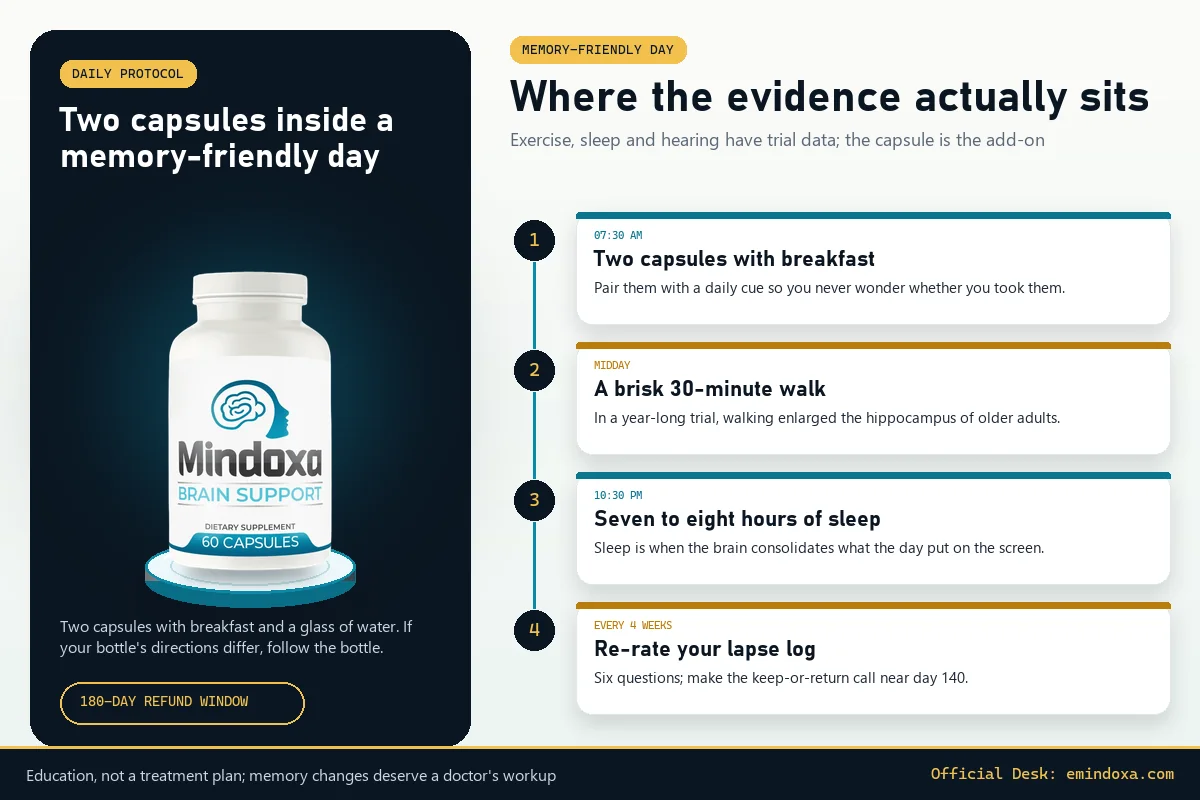
Figure 3. A memory-friendly day. Exercise and sleep carry the evidence; the capsule is the add-on.
Format
Mindoxa capsules vs. mushroom powders, extracts and plain food
The presentation says the formula began as a loose powder stirred into water and was later encapsulated, which it claims improved absorption. Capsules do not, by themselves, improve absorption of mushroom powder; what they change is convenience and how much fits in a dose. For mushrooms, the choice that matters more is which part of the fungus is used and how it is extracted.
Fruiting body vs. mycelium on grain
The fruiting body is the mushroom you can see and cook. Mycelium is the root-like network; many U.S. supplements are made by growing mycelium on rice or oats and grinding the whole block, grain included. A laboratory comparison found such products contained large amounts of starch from the grain and much less beta-glucan than fruiting bodies[35]. Mindoxa does not say which it uses. That one fact would tell a buyer more about the product than the entire presentation.
Hot-water and alcohol extracts
Beta-glucans dissolve in hot water; reishi's triterpenes and Lion's Mane's erinacines and hericenones need alcohol. Dual extracts concentrate both. An extract can deliver more of these compounds per capsule than raw powder, but only a label that states the extract type and a marker content lets anyone check that.
Mushrooms as food
The observational links between mushrooms and better cognitive aging come from people eating them: more than two portions of cooked mushrooms a week in Singapore, three or more times a week in a large Japanese cohort[27][28]. A 150 g portion of cooked mushrooms weighs more than a hundred Mindoxa capsules. Food cannot prove cause and effect either, but it is cheap, safe for most people and comes with ergothioneine, fiber and, for UV-treated button mushrooms, vitamin D[36].
Which format comes out ahead?
Whichever one tells you, in numbers, how much of the studied preparation you are swallowing. For Lion's Mane, that means a product that says "fruiting body" and gives its weight per serving. Mindoxa's capsule trades that clarity for breadth: ten names, none quantified.
Ordering
How to order Mindoxa in 4 steps
1
Choose the bundle
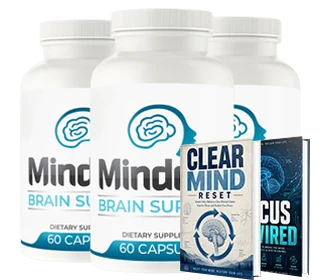
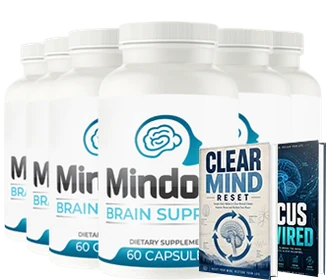
Two, three or six bottles; the larger two travel free within the U.S. and come with digital guides.
2
Pay on ClickBank
The order buttons lead to the seller's page, where a ClickBank form lists subtotal, delivery and any tax before payment.
3
Expect two messages
An instant ClickBank receipt, and a carrier link about a day after dispatch.
4
Keep the order number
No refund moves without the ClickBank ID, so store the receipt next to your start date.
The warehouse behind the orders
Boxes go out from the same Aurora, Colorado facility that receives returns, at 19655 E 35th Dr. Per the shipping terms, a weekday order is sent on the following working day, while anything placed Friday through Sunday waits for Monday, postal holidays aside. UPS or FedEx carry it most of the way and USPS makes the final delivery.
Delivery times and the small print
The policy and the sales FAQ agree on 5 to 7 business days anywhere in the lower 48. Nobody has to sign, and once the tracking shows "delivered", a missing box becomes the buyer's problem under the policy. Abroad, allow 10 to 14 business days and a $30 charge per product that is never returned.
Your card statement will show a ClickBank descriptor, such as CLKBANK*COM or one naming the pack (the two-bottle form reads CLKBANK*mindoxa2bottle), not "Mindoxa". Nothing is wrong when you see it. Carriers, tracking and problem cases are on the shipping page.
Official packs
How much does Mindoxa cost?
Totals as the ClickBank form showed them for a U.S. delivery address on October 19, 2026. Struck-through figures are the seller's $179-a-bottle anchors, a price nobody we know of has paid. The pricing page goes through the checkout line by line.
Spread over its days at the two-capsule dose, the big pack comes to $1.63 daily ($0.82 for each capsule). The middle pack is $2.30 daily, and the small pack $2.80 daily when its delivery fee is folded in. Six months on small packs alone would add up to $503.85, against $294 for a single big pack.
Cost per day calculator
Which pack makes sense?
Per day, nothing beats the six bottles, and since the refund takes back every bottle that arrives within 180 days, the real exposure is the cost of posting them. Still, if your memory has not been looked at by a doctor yet, or a pharmacist has not cleared your medicines, the three-bottle pack is the wiser opening move: three months spans most of a 16-week trial, delivery is free, and the refund terms are identical. The two-bottle pack is the priciest per day and runs out at 60 days, before the main Lion's Mane trial had finished.
About the "should be priced at $298" line
The presentation says a 60-day supply "should be priced at $298", while the order page crosses out $358 for the same two bottles. Two different anchors for one pack is a reminder that reference prices are marketing, a practice federal pricing guides warn about when the higher price was never really charged[52]. What the money buys is the ten-mushroom mix and a long return window; what it cannot buy is a known dose of anything. A single-ingredient Lion's Mane product that prints its fruiting-body grams lets you work out cost per gram, which Mindoxa's label does not.
Safety
Is Mindoxa safe? Side effects and interactions
Culinary and medicinal mushrooms are generally well tolerated, and the National Cancer Institute's review of medicinal mushrooms reports mostly mild digestive effects in trials[39]. The cautions with Mindoxa come from specific species in its list, from not knowing the amounts, and from the people most likely to buy a memory product, who are also the most likely to take several medicines. The detailed guide, mushroom by mushroom, is on Mindoxa side effects.
Ask your doctor or pharmacist before you start if you...
take warfarin, apixaban, rivaroxaban, clopidogrel or daily aspirin. Wood ear inhibits platelets ("Szechwan purpura"), maitake raised a warfarin patient's INR, and MSKCC lists bleeding cautions for reishi and chaga[33][31][40][42].
take insulin, a sulfonylurea or other glucose-lowering drugs. Maitake, reishi, chaga and sun mushroom may lower blood sugar, which adds to the medicine's effect[41][45].
take immune suppressants after a transplant or for autoimmune disease. Turkey tail, reishi, cordyceps and shiitake stimulate or modulate immune activity[44][43].
are having cancer treatment. Turkey tail and reishi are used alongside chemotherapy only under oncology supervision, and liver injury with sun mushroom was reported in cancer patients[32][34].
have liver disease. Rare cases of severe liver injury have been linked to reishi powder products[22][23].
have kidney stones or kidney disease. Chaga is very high in oxalate, and heavy use caused oxalate kidney injury[24].
are allergic to mushrooms or molds, or have surgery coming up. Shiitake can cause a whip-like rash, and mushrooms with antiplatelet effects are usually stopped about two weeks before surgery[30][46].
Mushroom and medicine screen
Tick what applies. The tool lists which of the ten named mushrooms carry a published caution for that situation. It cannot weigh doses, because none are printed.
Put the bottle down and phone your doctor
on any sign of jaundice (yellow skin or eyes), cola-colored urine, an ache below the right rib cage, bruises or bleeding you cannot explain, a new rash, or fresh confusion. Suspected reactions to supplements can be reported to the FDA through MedWatch.
Expectations
How long does Mindoxa take to work?
Lion's Mane studies lasted anywhere from 4 to 49 weeks; the main one, in mild cognitive impairment, reported its result at week 16[12][14]. Six months of refund cover is enough to copy that span and still make a decision with weeks to spare. A fuller plan lives on the results timeline.
First fortnight: baseline and habit
Fill in the lapse log above before the first capsule, write the total and the date on the receipt, and start the morning routine. Note any stomach upset or rash in the first days.
Weeks 3 to 8: early check-ins
Score the log again at weeks 4 and 8. Early improvements usually reflect better sleep, more walking or simply paying attention, which still counts as progress. Keep them going.
Weeks 9 to 16: the stretch that matches the trial
Mori and colleagues reported their finding within these weeks. Compare the week 16 total with your baseline. If you need a magnifying glass to find the improvement, treat it as no improvement.
Weeks 17 to 20: the decision point
A log that has not shifted means it is time to request the refund, ideally near day 140. Day 180 is the date the box has to be sitting in Aurora, so posting it then would be too late.
The lapse log is a personal tracking tool, not a cognitive test, and a stable score is not proof that nothing is wrong. Any steady worsening deserves a doctor's visit.
Refund route
Does Mindoxa have a money-back guarantee?
It does, for 180 days after the purchase, and ClickBank administers it. The sales copy says "no questions asked"; the returns policy then lists the conditions that actually decide the outcome. Seven steps cover them all, and a print-friendly copy sits on the guarantee page.
1. Checkout day is day one
Count from the purchase date on the receipt; delivery day does not reset anything. Jot that date on the first bottle's label.
2. Allow a proper test
About 16 weeks of daily use, with the lapse log filled in each month, gives a verdict based on more than mood.
3. Make the call near day 140
Under the policy the parcel has to be received by the warehouse inside the 180 days. Choosing at week 20 builds in a cushion for slow post.
4. Notify the helpdesk or ClickBank
Write to [email protected], which promises a reply inside a day, or raise it with ClickBank order support, also reachable on 1-800-390-6035. That number, listed on the seller's support page, belongs to ClickBank, which makes ClickBank the shortest path for anything order-related.
5. Ship back the whole order
Every bottle you received goes back, whether finished, half-used or never opened, and that includes promotional extras. Address the parcel to 19655 E 35th Dr #100, Aurora, CO 80011 and tuck in a handwritten or printed slip stating the ClickBank order number, your name and the address it was delivered to, plus an email and phone number; add the original packing slip if you kept it. A bottle short, or a note nobody can read, can stall the whole refund.
6. Postage is yours
The returns policy puts the cost of sending it back on the customer without exception. Pick a service with tracking and hold on to the proof of postage. Orders shipped abroad also forfeit the $30 international delivery charge for each product.
7. Watch the card statement
When the warehouse books the parcel in, the money is credited to the card you paid with, typically visible after 3 to 5 business days depending on the bank. The bonus e-guides have a separate 180-day refund you can ask for.
Refund deadline calculator
Reasons people return it (no made-up percentages)
The log never moved
The likeliest outcome. Effects in mushroom studies are modest when they appear at all, and unlisted amounts may fall short of those studies.
Expecting a breakthrough
The presentation promises a restored "save button" and protection from dementia. Anyone expecting that from any supplement will be disappointed.
The pharmacist objected
Anticoagulants and glucose-lowering drugs are everyday prescriptions after 60. Sending back unopened bottles on that advice is exactly what the guarantee exists for.
Claims audit
Is Mindoxa legit or a scam?
Neither label fits. As a purchase, Mindoxa is above board: ClickBank sells it as retailer of record, the order form spells out every charge, no subscription is tucked in, and the 180-day refund is written down with a real street address for returns. ClickBank honors refunds like this every day once the paperwork is right.
The sales material deserves far less trust. The presentation is narrated by a "Dr. Thomas Crane", introduced as an integrative physician and neuroscientist, and features a colleague at a "memory research lab affiliated with Johns Hopkins" and a patient named Margaret. The page gives no full credentials, license number or institution for any of them, its footnote says "story scenes are AI-generated illustrations", and the seller's terms state it may use actors and voice actors to present its products. The main claims, one by one:
Claim in the presentation
What we found
Researchers "just identified" a "save button" in the brain
Long-term potentiation was first described in 1973 and is textbook neuroscience[10].
A Harvard study found "zero" save-button response in Alzheimer's patients; a Milan study of 73 adults found a fivefold dementia risk
TMS studies do show weaker LTP-like plasticity in Alzheimer's disease[11]. The page cites neither study, so the specific figures could not be checked.
Cordyceps "rebuilds" damaged hippocampal wiring; Reishi activates CREB and BDNF
Cell and rodent studies; no human memory trial for either[17][20].
Lion's Mane "helped reverse" memory decline in a clinical trial
One 16-week trial in 30 people at 3 g a day; scores improved and fell back after stopping[12].
Mindoxa can "protect your brain from the early decline that leads to diseases like Alzheimer's and dementia"
A disease-prevention claim that dietary supplements may not make; no supplement has prevented dementia in a large trial[49][37].
"Over 10,000 people" have used it; "over 90%" choose six bottles
No source shown. The order page says "97% of customers order 6 bottles".
"As featured in" Harvard, Stanford, Yale, Columbia and ABC logos
The same page states Mindoxa "is not endorsed by, sponsored by, or affiliated with" those organizations.
Parts of the sales funnel look recycled from other products: a pop-up shown when leaving the order page advertises a "Blood Sugar Secret" for "lowering their blood sugar", the support page's copyright names Revaslim, a "2 Free Bonuses" heading sits above three bonus guides, and the scientific references on the order page are general news articles about Alzheimer's research, none of them about mushrooms. Recycled templates do not make a capsule unsafe; they do mean the story is the wrong thing to judge it by. Your own log and your doctor's view are better guides. Under the FTC's endorsement guides, testimonials must either show what typical buyers experience or say plainly that they do not; Mindoxa's fine print calls its testimonials not guarantees of results[51].
Channels
Where to buy Mindoxa
Anyone who typed "Mindoxa Supplement Official" into a search box is looking for the seller's own order page on getmindoxa.com, where ClickBank runs the payment. That page is the official store; this guide is independent and simply points to it. Orders placed anywhere else fall outside the 180-day refund. Our buttons route through a brief redirect so the seller can see which guide sent you.
Spelling and packaging
It is a single word, "Mindoxa", though searches also show "Mindoxia", "Mind Oxa", "Mindox" and "Mindoxa Pro". Expect a white bottle and cap, a teal profile of a head with a brain inside, the name in grey capitals, "Brain Support" in pale teal, and a teal strip reading "60 Capsules". Any other capsule count, logo or suffix such as "Pro" or "Max" is another product.
Unauthorized sellers
Amazon, eBay and Walmart had no Mindoxa listings in a web search on October 19, 2026. Should one turn up, the contents might be real, but ClickBank's refund would not apply and nobody could vouch for how the bottle was stored or how old it is. What does exist is a crop of copycat "review" pages on free site builders and form services, plus paid press releases on news sites, nearly all linking to the same order page. The seller runs none of them. See where to buy Mindoxa for more.
Review audit
Mindoxa reviews: what we could verify
On October 19, 2026 we went looking for customer feedback on Trustpilot, Amazon and eBay, in news results, and through a web search aimed at Reddit. Trustpilot's only Mindoxa entries are titled "Mindoxa Capsules Experience Benefits Reviews And Complaints" and attach to an outside page made with a free site builder, not to the seller; none holds a substantive review. The web search returned no Reddit threads and no marketplace listings. The many "Mindoxa review" articles in news feeds are sponsored releases, labeled as advertorials and carrying affiliate links.
The presentation shows short quotes without names or ages, plus a "patients" story the seller marks as AI-illustrated, and it says "over 10,000 people" have used the formula, with no source. None of that is counted here, and no stars appear, since an average needs a body of independent reviews that does not yet exist. If one forms, this section and the reviews page will summarize it.
Common complaints about Mindoxa
Lacking verified buyer reports, we built this list from the seller's own terms and from what typically goes wrong with products sold this way, and we label it accordingly:
Return hassle. Shoppers who only saw "no questions asked" are caught out by the need to mail back all the bottles, with a written note, at their own cost.
An unfamiliar card charge. The statement shows ClickBank, not Mindoxa.
Bonus confusion. The heading promises two free bonuses and the list shows three e-guides, all digital.
Presenter doubts. Buyers who look for Dr. Thomas Crane's credentials will not find them on the page.
No noticeable change. The most common complaint across memory supplements, consistent with the trial record.
Our verdict
Our editorial score for Mindoxa
Six measures, each graded from the public record as of October 19, 2026. The low total is not a safety warning; most of it comes from information the seller keeps back and promises its presentation cannot support.
4.6out of 10
Refund terms (half a year, via ClickBank)7.5
Safety profile (mushroom cautions)6.0
Ingredient choice vs. evidence5.0
Price per day5.0
Label disclosure (no amounts, no part used)2.5
Marketing accuracy1.5
Who writes and reviews this Mindoxa site?
Mindoxa Extract Audit Desk is a three-person independent desk. A research editor writes each draft from the original material: the seller's pages, the order form, the bottle and the PubMed records. A verification editor then re-checks every figure, dose and reference, and a third editor reworks the text for clarity and makes sure safety points are impossible to miss. None of us is a physician, and nothing here is personal medical advice. Our editorial board page and editorial standards explain the process.
How this site is paid for
Orders placed through our buttons pay us a commission; the price you pay is unchanged. That income has no say over the score, the safety warnings or the return instructions, and we have no connection to the maker, the seller, the warehouse or ClickBank beyond the referral. Spotted a mistake? Email [email protected]; every fix is logged with its date.
From the search box
What people search about Mindoxa
Short, direct replies to the questions that show up most often beside the brand name in search suggestions.
Are there real Mindoxa reviews?
Almost none that can be checked. On October 19, 2026 we found Trustpilot profiles filed under a third-party lovable.app page with no substantive reviews, sponsored press releases, and four short quotes in the sales presentation, which the seller's footnote says are not guarantees of results. The 'over 10,000 people' figure has no visible source.
Is Mindoxa legit?
As a transaction, yes: ClickBank sells it and pays refunds on bottles that come back within 180 days of purchase. The story around it is not reliable evidence: a presenter whose credentials cannot be checked, scenes the seller marks as AI-generated, and promises to 'reverse' memory loss that no mushroom trial supports.
Does Mindoxa work for Alzheimer's or dementia?
No study shows that, and supplements are not allowed to claim to treat or prevent any disease. A small pilot trial of a Lion's Mane mycelium extract in mild Alzheimer's disease reported some benefit, but it used a specific standardized preparation that Mindoxa does not say it contains.
Is “Mindoxia” the same as Mindoxa?
“Mindoxia”, “Mind Oxa” and “Mindox” are spellings people type for Mindoxa. Look for a white bottle and cap with a teal head-and-brain mark, “Brain Support” and “60 Capsules”. Bottles from any other source, or with another count or logo, fall outside the refund.
What is the brain's “save button”?
It is the sales page's name for long-term potentiation (LTP), the strengthening of synapses that underlies learning. LTP is real and was first described in 1973. What is not established is that any mushroom capsule restores it in people; the supporting studies were done in cells and rodents.
Who is Dr. Thomas Crane?
He is the narrator of the Mindoxa presentation, described as an integrative physician and neuroscientist. The page gives no full credentials, license or institution that would let a reader verify him, its footnote says the story scenes are AI-generated, and the seller's terms say actors may present its products.
References
Every source below was opened on October 19, 2026. Human trials tested single mushrooms in specific preparations and doses; none tested Mindoxa. This list is educational and does not replace a clinician's advice.
5Gray SL, Anderson ML, Dublin S, et al. Cumulative use of strong anticholinergics and incident dementia: a prospective cohort study. JAMA Intern Med. 2015;175(3):401-407. pubmed.ncbi.nlm.nih.gov/25621434/
6Lin FR, Pike JR, Albert MS, et al. Hearing intervention versus health education control to reduce cognitive decline in older adults with hearing loss in the USA (ACHIEVE): a multicentre, randomised controlled trial. Lancet. 2023;402(10404):786-797. pubmed.ncbi.nlm.nih.gov/37478886/
8Erickson KI, Voss MW, Prakash RS, et al. Exercise training increases size of hippocampus and improves memory. Proc Natl Acad Sci U S A. 2011;108(7):3017-3022. pubmed.ncbi.nlm.nih.gov/21282661/
9Livingston G, Huntley J, Liu KY, et al. Dementia prevention, intervention, and care: 2024 report of the Lancet standing Commission. Lancet. 2024;404(10452):572-628. pubmed.ncbi.nlm.nih.gov/39096926/
10Bliss TV, Collingridge GL. A synaptic model of memory: long-term potentiation in the hippocampus. Nature. 1993;361(6407):31-39. pubmed.ncbi.nlm.nih.gov/8421494/
11Di Lorenzo F, Ponzo V, Bonnì S, et al. Long-term potentiation-like cortical plasticity is disrupted in Alzheimer's disease patients independently from age of onset. Ann Neurol. 2016;80(2):202-210. pubmed.ncbi.nlm.nih.gov/27255833/
12Mori K, Inatomi S, Ouchi K, Azumi Y, Tuchida T. Improving effects of the mushroom Yamabushitake (Hericium erinaceus) on mild cognitive impairment: a double-blind placebo-controlled clinical trial. Phytother Res. 2009;23(3):367-372. pubmed.ncbi.nlm.nih.gov/18844328/
13Saitsu Y, Nishide A, Kikushima K, Shimizu K, Ohnuki K. Improvement of cognitive functions by oral intake of Hericium erinaceus. Biomed Res. 2019;40(4):125-131. pubmed.ncbi.nlm.nih.gov/31413233/
14Li IC, Chang HH, Lin CH, et al. Prevention of early Alzheimer's disease by erinacine A-enriched Hericium erinaceus mycelia pilot double-blind placebo-controlled study. Front Aging Neurosci. 2020;12:155. pubmed.ncbi.nlm.nih.gov/32581767/
15Docherty S, Doughty FL, Smith EF. The acute and chronic effects of Lion's Mane mushroom supplementation on cognitive function, stress and mood in young adults: a double-blind, parallel groups, pilot study. Nutrients. 2023;15(22):4842. pubmed.ncbi.nlm.nih.gov/38004235/
16Friedman M. Chemistry, nutrition, and health-promoting properties of Hericium erinaceus (Lion's Mane) mushroom fruiting bodies and mycelia and their bioactive compounds. J Agric Food Chem. 2015;63(32):7108-7123. pubmed.ncbi.nlm.nih.gov/26244378/
17Tuli HS, Sharma AK, Sandhu SS, Kashyap D. Cordycepin: a bioactive metabolite with therapeutic potential. Life Sci. 2013;93(23):863-869. pubmed.ncbi.nlm.nih.gov/24121015/
18Hirsch KR, Smith-Ryan AE, Roelofs EJ, Trexler ET, Mock MG. Cordyceps militaris improves tolerance to high-intensity exercise after acute and chronic supplementation. J Diet Suppl. 2017;14(1):42-53. pubmed.ncbi.nlm.nih.gov/27408987/
19Chen S, Li Z, Krochmal R, Abrazado M, Kim W, Cooper CB. Effect of Cs-4 (Cordyceps sinensis) on exercise performance in healthy older subjects: a double-blind, placebo-controlled trial. J Altern Complement Med. 2010;16(5):585-590. pubmed.ncbi.nlm.nih.gov/20804368/
20Huang S, Mao J, Ding K, et al. Polysaccharides from Ganoderma lucidum promote cognitive function and neural progenitor proliferation in mouse model of Alzheimer's disease. Stem Cell Reports. 2017;8(1):84-94. pubmed.ncbi.nlm.nih.gov/28076758/
22Wanmuang H, Leopairut J, Kositchaiwat C, Wananukul W, Bunyaratvej S. Fatal fulminant hepatitis associated with Ganoderma lucidum (Lingzhi) mushroom powder. J Med Assoc Thai. 2007;90(1):179-181. pubmed.ncbi.nlm.nih.gov/17621752/
23Yuen MF, Ip P, Ng WK, Lai CL. Hepatotoxicity due to a formulation of Ganoderma lucidum (lingzhi). J Hepatol. 2004;41(4):686-687. pubmed.ncbi.nlm.nih.gov/15464254/
24Kikuchi Y, Seta K, Ogawa Y, et al. Chaga mushroom-induced oxalate nephropathy. Clin Nephrol. 2014;81(6):440-444. pubmed.ncbi.nlm.nih.gov/23149251/
25Cheah IK, Halliwell B. Ergothioneine; antioxidant potential, physiological function and role in disease. Biochim Biophys Acta. 2012;1822(5):784-793. pubmed.ncbi.nlm.nih.gov/22001064/
26Cheah IK, Feng L, Tang RMY, Lim KHC, Halliwell B. Ergothioneine levels in an elderly population decrease with age and incidence of cognitive decline; a risk factor for neurodegeneration? Biochem Biophys Res Commun. 2016;478(1):162-167. pubmed.ncbi.nlm.nih.gov/27444382/
27Feng L, Cheah IK, Ng MM, et al. The association between mushroom consumption and mild cognitive impairment: a community-based cross-sectional study in Singapore. J Alzheimers Dis. 2019;68(1):197-203. pubmed.ncbi.nlm.nih.gov/30775990/
28Zhang S, Tomata Y, Sugiyama K, Sugawara Y, Tsuji I. Mushroom consumption and incident dementia in elderly Japanese: the Ohsaki Cohort 2006 Study. J Am Geriatr Soc. 2017;65(7):1462-1469. pubmed.ncbi.nlm.nih.gov/28295137/
29Dai X, Stanilka JM, Rowe CA, et al. Consuming Lentinula edodes (Shiitake) mushrooms daily improves human immunity: a randomized dietary intervention in healthy young adults. J Am Coll Nutr. 2015;34(6):478-487. pubmed.ncbi.nlm.nih.gov/25866155/
30Boels D, Landreau A, Bruneau C, et al. Shiitake dermatitis recorded by French Poison Control Centers: new case series with clinical observations. Clin Toxicol (Phila). 2014;52(6):625-628. pubmed.ncbi.nlm.nih.gov/24940644/
31Hanselin MR, Vande Griend JP, Linnebur SA. INR elevation with maitake extract in combination with warfarin. Ann Pharmacother. 2010;44(1):223-224. pubmed.ncbi.nlm.nih.gov/20040699/
32Torkelson CJ, Sweet E, Martzen MR, et al. Phase 1 clinical trial of Trametes versicolor in women with breast cancer. ISRN Oncol. 2012;2012:251632. pubmed.ncbi.nlm.nih.gov/22701186/
34Mukai H, Watanabe T, Ando M, Katsumata N. An alternative medicine, Agaricus blazei, may have induced severe hepatic dysfunction in cancer patients. Jpn J Clin Oncol. 2006;36(12):808-810. pubmed.ncbi.nlm.nih.gov/17105737/
35McCleary BV, Draga A. Measurement of β-glucan in mushrooms and mycelial products. J AOAC Int. 2016;99(2):364-373. pubmed.ncbi.nlm.nih.gov/26957216/
36Cardwell G, Bornman JF, James AP, Black LJ. A review of mushrooms as a potential source of dietary vitamin D. Nutrients. 2018;10(10):1498. pubmed.ncbi.nlm.nih.gov/30322118/
37DeKosky ST, Williamson JD, Fitzpatrick AL, et al. Ginkgo biloba for prevention of dementia: a randomized controlled trial. JAMA. 2008;300(19):2253-2262. pubmed.ncbi.nlm.nih.gov/19017911/
38Ngandu T, Lehtisalo J, Solomon A, et al. A 2 year multidomain intervention of diet, exercise, cognitive training, and vascular risk monitoring versus control to prevent cognitive decline in at-risk elderly people (FINGER): a randomised controlled trial. Lancet. 2015;385(9984):2255-2263. pubmed.ncbi.nlm.nih.gov/25771249/
Ten replies that lead with the answer. The full FAQ page has forty, sorted into six topics.
Does Mindoxa reverse memory loss or prevent dementia?
No study shows that it does. Mindoxa itself has never been tested, and no dietary supplement has been shown to prevent dementia; even ginkgo failed in a six-year trial of 3,069 older adults. The best single-mushroom evidence, for Lion's Mane, comes from small trials in mild cognitive impairment that used about 3 grams a day.
Is Mindoxa legit or a scam?
Buying it is safe enough as a transaction: ClickBank acts as retailer, every charge is listed before you pay, and returns go to a real Colorado address within 180 days. The weak link is the sales presentation. It uses a presenter who cannot be verified, story scenes the seller labels as AI-generated, and disease-prevention language that supplements are not allowed to make.
What are the ingredients in Mindoxa?
The seller names ten mushrooms: Cordyceps, Reishi, Lion's Mane, Chaga, Shiitake, White Button, Maitake, Turkey Tail, Wood Ear and Sun Mushroom. It publishes no milligram amounts, no extract ratios and no Supplement Facts panel, and it does not say whether it uses fruiting bodies or mycelium grown on grain.
How do you take Mindoxa capsules?
Take two capsules daily, because each 60-count bottle is sold to last a month; the seller recommends doing it at breakfast with water. Where the printed label on your bottle gives other directions, the label takes priority.
What are the side effects of Mindoxa?
Most edible and medicinal mushrooms are well tolerated, with stomach upset the usual complaint. The specific cautions are mushroom or mold allergy, a whip-like rash some people get from shiitake, rare liver injury reported with reishi and sun mushroom powders, and oxalate kidney injury reported with heavy chaga use. Stop and see a doctor if you notice yellow skin, dark urine or unusual bruising.
Can I take Mindoxa with blood thinners or diabetes medicine?
Ask your prescriber or pharmacist first and bring the bottle. Reishi, maitake and wood ear have reports or lab data suggesting they slow clotting, and a warfarin patient's INR rose after starting maitake. Maitake, reishi and chaga may also lower blood sugar, which adds to insulin or sulfonylureas. The seller's own FAQ also says to talk to your doctor.
Can Mindoxa replace donepezil or other memory medicines?
No. Mindoxa is a dietary supplement and has no trial in people with Alzheimer's disease or any other dementia. Never stop or change a prescribed memory medicine without the doctor who prescribed it, and mention every supplement you take at each visit.
How much does Mindoxa cost?
The ClickBank order form charges $158 for two bottles ($79 apiece) with $9.95 added for U.S. delivery, $207 for three ($69 apiece) and $294 for six ($49 apiece), the last two shipped free. Taking two capsules daily, the daily cost ranges from $1.63 on six bottles to $2.80 on two.
Is Mindoxa FDA approved?
No. Supplements reach the market without FDA approval, and Mindoxa's own fine print notes that the agency has not evaluated its claims. The capsules are described as made in the United States, yet no factory is named and no test results are posted.
How do I get a Mindoxa refund?
Tell the seller's helpdesk or ClickBank, quoting the order number, then post all the bottles, finished or not, to 19655 E 35th Dr #100, Aurora, CO 80011 with a slip giving the ClickBank order ID, your name, delivery address, email and phone. The parcel has to reach Aurora within 180 days of purchase, and the postage is yours.
Try Mindoxa with a 180-day window
Fill in the lapse log tonight, book the hearing test you keep putting off, and mention the bottle at your next appointment. A log that looks unchanged at week 20 still leaves time to get the bottles back to Colorado for a refund.